My Dad turns 92 in a month. He’s active, plays 100 rounds of golf a year, and regularly shoots his age or better. His mind is sharp and he’s still loving life. I’ve been blessed in so many ways to have him as long as I have. We’ve been golfing together for about 45 years and he remains my favourite golfing partner. Along with my sisters, he’s one of three people I’ve known my whole life.
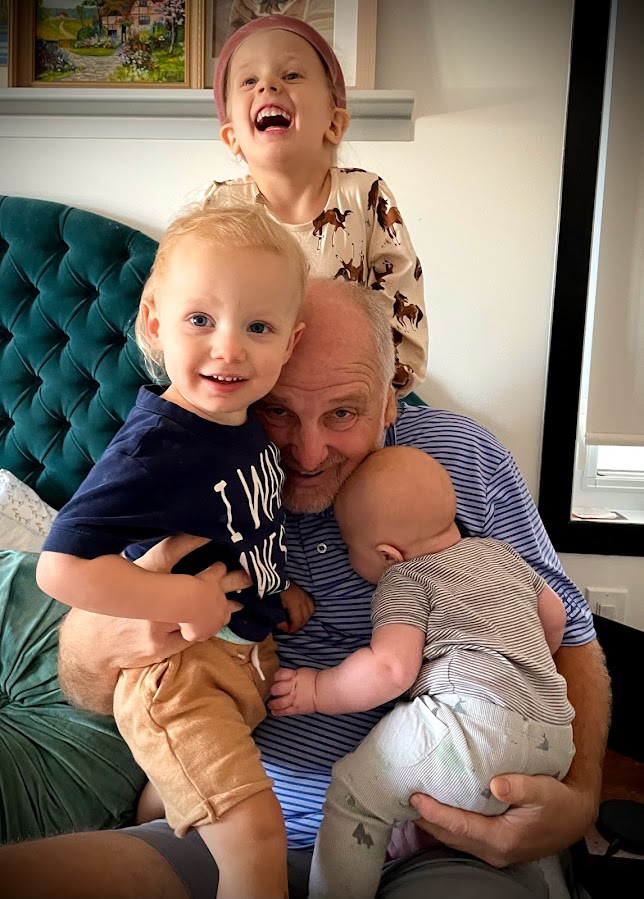
On the other end of the spectrum of favourite people are my 3 grand-kids. As I’ve mentioned often, they are truly my pride and joy. Biased, I unabashedly brag about them and show them off whether in person or via social media. I love them and am proud of them and take delight in them. I feel very similar about my Dad.
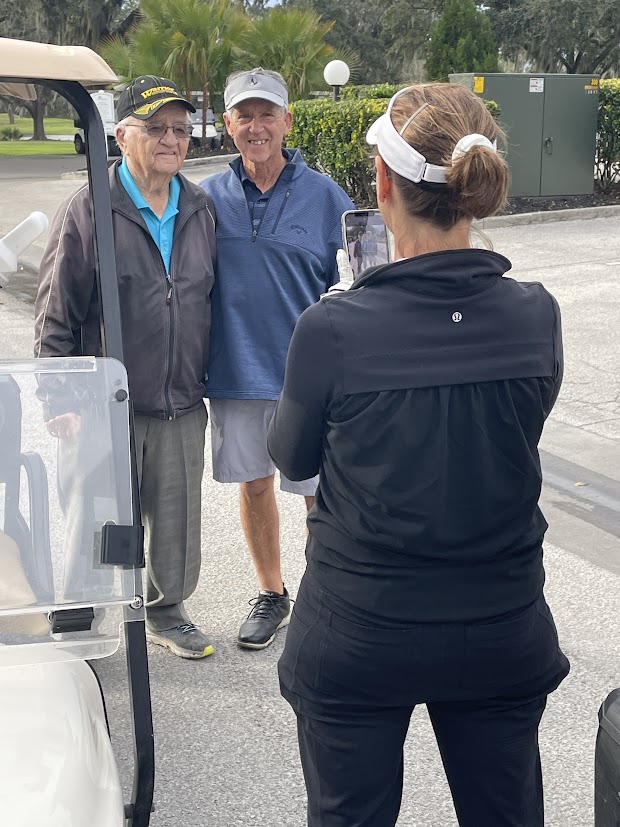
When we golf in Florida, we’re often paired up with people. Without exception, they are amazed at how fit and how well he plays the game at 91. Probably for the last decade, I’ve seen this response over and over. People envy his health and all desire to be able to golf as well as he does when they reach that age. I watch in delight as he gets asked lots of questions about his life and they watch in awe as he still can hit a drive nearly 150 yards. Yesterday the couple we played with was a man and a woman in their 70s. Dad is a great golf partner for several reasons. He plays quickly, compliments and encourages his playing partners, and always shares a story or two that makes people laugh. At the end of our round, they asked if they could take a picture together. It was like watching a celebrity with his fans.
It’s not lost on me how fortunate I am. I’m grateful for all the time I’ve had with him and understand like he does, that this is all bonus time. My Dad is a delight in many ways and this was another cool example.
For the record, I started this series on delight back in 2019 and had no expectations about how many I would write. While there’s no consistency in how of these essays I write, I take solace in knowing I can and will write about these moments whenever they occur. That said, I need reminders to see and feel delight.
Part of me thinks I could write an endless series just about golf but I realize that only a small percentage of you can relate which adds to the challenge of writing about it in such a way that it resonates with my readers. Golf remains not only a hobby or passion of mine but it is an oddly spiritual experience. While I love the social elements of golf, I love going out later in the evening and golfing alone. It’s a wonderfully quiet, serene time to reflect or simply shut off from the world. I realize many folks choose to run, walk or hike to experience this but for me spending time on a golf course, trying to hit shots, and analyzing my mistakes is truly cathartic.
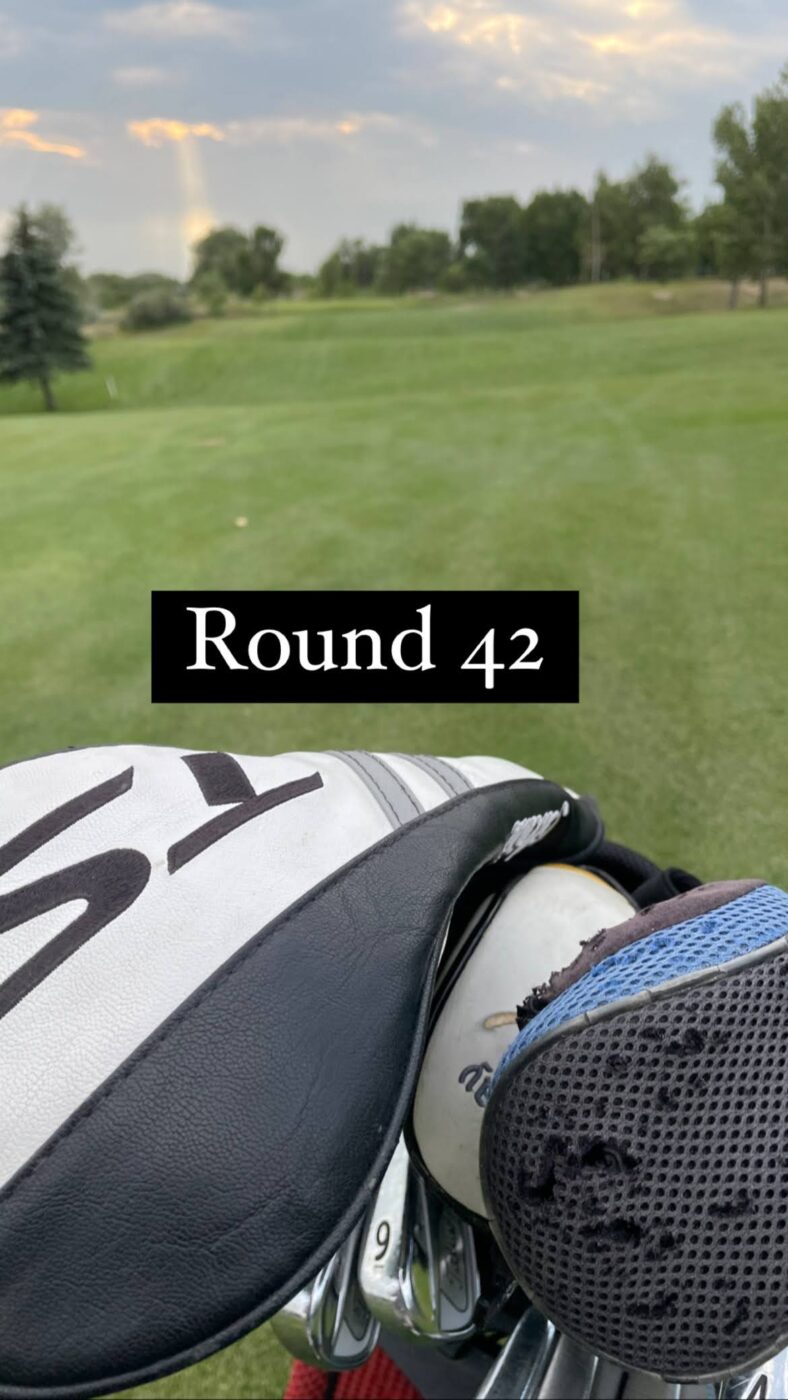
The book The Lost Art of Playing Golf speaks to the joy of hitting shots, failing and trying again. Too often golfers get bogged down in perfection and technique and forget that it’s a hard and at times mean game where you rarely hit the shot you envision. Last night I teed off at 6:52 pm on a cloudy windy evening. Most golfers abhor the wind as it wreaks havoc on even the best shots you hit. I used to feel that way but after reading that book I love it as it adds another element that I need to embrace. Rather than fight it, I try and work with it. I hit a couple of terrible shots but I did hit a few really good ones and walking uphill, into the wind to see the ball sitting 15 feet from the pin is pure delight. Even shots which don’t appear to be that great in terms of proximity to the hole I know are perfect shots given the difficulty of the conditions.
I finished my round right at 9 pm just before sunset. I looked around and saw the parking lot was empty. I looked at my watch to see I had walked 10 kilometres. I was tired but grateful. Most golfers today ride a cart. I choose to walk most of the time and take an extra degree of pride as I play through golfers half my age as they ride around in power carts. I hope I will continue to walk well into my 60s and 70s. The combination of walking, playing alone, playing quickly, and playing in the wind on a summer evening is a recipe for delight. For me anyway.
I can’t imagine anyone reading this who is even vaguely aware of who I am wouldn’t know how much I love golf. As my primary hobby/interest/passion, I spend a lot of time not only invested in playing the game but thinking about it, not simply from a technical and physical pursuit but also the many ways in which it is both a metaphor for life but all the amazing lessons I’ve learned because of playing this game.
Part of being a golfer means going on golf trips with your buddies. I recall the first trips I took as a teenager, tagging along with my Dad and his buddies. This is where I learned a bunch of added games like “Bingo, Bango, Bongo”, “Wolf”, “Nassau”, “Sixes”, and more. For the past number of years, I organized most of the trips and they’ve usually involved 4 of us and quite often just myself and another buddy. As the organizer, I typically choose the courses, tee times and even the evening activities which were usually limited simply because we almost always played 36 holes a day, playing from sunrise till sunset.
This year, I was invited to join a trip that involved 8 of us of which 4 members I’d either never met or only knew peripherally. Choosing to spend 4 days from sunup to sundown with people you don’t know well, is a bit risky. It turned out to be a wonderful trip. I got to visit and make connections with these men at various levels. None of us are particularly good golfers but playing in the mountains and being in nature was soul-filling. We laughed a lot and enjoyed some friendly competition. Golf doesn’t develop character, it reveals it. You can learn a great deal from someone after a round of golf. Add to that a couple of meals and maybe a card game, you can probably assess someone very accurately.
One of our members was a doctor from a rural town outside of Moose Jaw. I’d never met him before and after one round of golf, I could tell he was a kind, caring and thoughtful man. The more time we spent together, this assessment was affirmed. One evening some of us wanted to get some Texas hold ‘em lessons. My new doctor friend had never played but was focused on the concept of bluffing. While he was told it’s only one strategy, he became fixated on it and after a few dummy hands we played and of course he was out quickly after a few too many of his bluffs were called. We couldn’t help but laugh and tease him and he took it all in stride. It didn’t bother him at all.
One evening we attended a concert featuring a jazz band from New Orleans. It was a tight space not designed for concerts, but everyone was enjoying the music. We came late and were at the very back of the room. Because he loves music and dancing, my new doctor friend, began dancing. I don’t dance. I didn’t learn to dance, and it’s just never been part of my life. In fact, if I’m being honest, I’d rather make fun of people dancing. Probably because of my own deficiencies, dancing always looks awkward to me. But there’s a vulnerability there that is admirable.
As he started dancing, a few older women joined him. Three of them at the very back of the room, in their own world, having a great time. The other members of my group were smiling and giggling as our friend stood out in the crowd moving his body to the music and not caring a wit what anyone else thought of him, let alone his golf buddies. A number of us took out our cameras and filmed him to share in our group chat. As the band played their last song, our doctor friend started dancing and moved right up to the band along with his 2 female followers. As I filmed him, I witnessed a real-life enactment of this very famous TED talk.
The Derek Sivers “How to Start a Movement“ talk provides a wonderful example of what leadership can look like.
I realize Siver’s focus is not on the lone nut but the first follower which is certainly an underrated aspect of movements but with my friend, our own “lone nut”, it’s worth exploring what leadership looks like. As I’ve learned over the years, the characteristics of good leaders aren’t particularly helpful in figuring out leadership. The characteristics you might list are preferences of leaders you like but the only true measurement of leadership is followers.
I talked to him after and asked him about his motivation. He said, “I just love music and love to dance.” He said he also wanted others to feel free to dance too and felt maybe if I do it, others might join. Clearly, there were many just itching to dance but maybe because of people like me, felt awkward and didn’t want to be a spectacle but just wanted to enjoy themselves and do what their body is begging them to do. My friend gave people permission to have fun. What I witnessed was one of the most beautiful things I’ve seen. After the concert ended, he had stranger after stranger thank him and our group had to wait outside until he had finished acknowledging his new fans. I think he had more people talking to him than the band, and the band was very good. As we waited, we all were smiling and proud of what our golf buddy had done. It was clear, our friend was a leader. There are so many great memories from this trip but watching my new friend start a movement will likely be the longest lasting one.
I don’t really do the #oneword thing. I mean I think about it and naturally, a word seems to emerge but not with the same intention as many. In the past, I’ve used and focused on things like joy and delight and those words last much longer than a year. They stick and become part of my personal and professional persona.
This year I do have a word that has been emerging over the past few months so perhaps there’s value in documenting and recording it. So my sorta #oneword for 2023 is savour or savor for those who have an aversion to the letter u.
Savour, as in “to relish for an extended time” is for me about slowing down and being mindful.
I want to savour the food I eat. As I eat better, part of that work is to savour and be mindful of what I eat. Being a little more French and making eating an event even when it really isn’t an event is something that might improve my relationship with food and avoid those occasions where we squeeze food into our busy schedules.
I want to savour the time I spend with my grandkids. If you know me at all, you know that my three grandkids are a big part of my world. While I’m blessed to live in the same city and get to spend as much time as I want, I also know it won’t be like this for long. The youngest is approaching 2 and in a few years, they’ll all be in school and will be leading their own lives full of activities and friends. I don’t want to take any moments for granted. Even those where they cry or act their age. This is a magical time in a person’s life and I want to get all I can out of it.
I want to savour my golf. Golf is almost a spiritual experience for me. Being outdoors and being with friends and working on my game are all things that I truly love. Golf is such a metaphor for life in that it brings up a lot of feelings and highs and lows in a few hours. Embracing all of it is something I’m pretty good at already but want to continue to pursue.
I want to savour my travels. My wife and I travelled over Christmas and like everyone else had our delays and cancellations. But rather than focusing on that, we think of our time away as a gift. Seeing the world means accepting that it’s not always easy but that the literal journey is part of it.
I want to savour my weekends. While I’ve been working remotely for over a decade, Not until the pandemic was I truly a 40-hour week in front of a computer guy. Previously I travelled so much that when I was home it was rarely a full week so it didn’t feel quite so mundane. Since 2022, I noticed how much more I looked forward to the weekend. Detaching from work has been so important. At times, I still feel the urge to do a little work but for the most part, I’ve resisted. I want to continue to see weekends as a time to rest and rejuvenate.
I want to savour work. At 58, I’m often asked and ask myself about retirement. I’m not ready and not sure when I will be but I don’t envision retirement will be something I do to avoid work. I do enjoy what I do. I will say that in the past few years spending less time in person with people has been difficult. The administrative part of my work can be a challenge because you don’t always have the immediate feedback of time spent with people provides. But I also know one day I’ll miss it all.
I want to savour time alone. I love my wife and family and friends but I do like my time alone. Whether that’s a walk or the occasional solo round of golf or travelling, my alone time is my time to reflect, meditate, pray and just be still. Being present and enjoying the quiet can be restful and life giving.
Savouring will be something that I’ll need to remind myself often to remember. While it sounds good in theory, it’s often difficult to practice. But it is about mindfulness and relishing all that it means to be human.
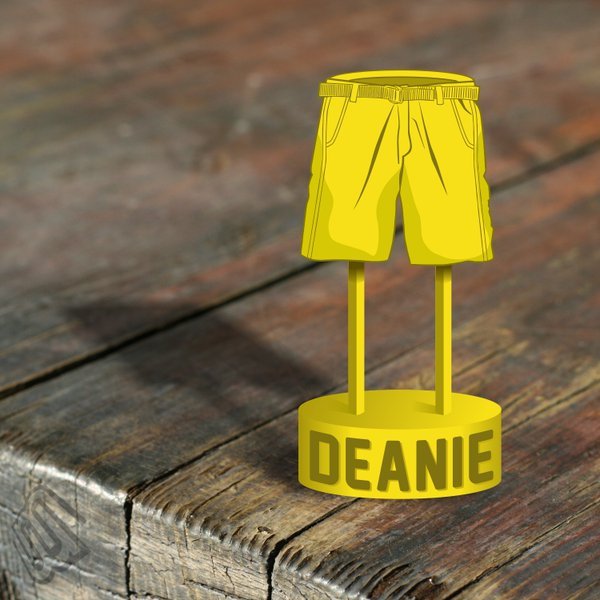
My annual giving out of random-meaningless-to-most-but-meaningful-to-me awards which began in 2015, almost didn’t happen. With the year(s) that it has been, it’s difficult to find routine at times. As well, when this began I was a travel warrior and my memories of interaction were largely in person. Yet Twitter was the glue that kept relationships alive and in some cases where they were born. (FYI, if you’re curious about the fake trophy, it’s a picture of shorts, in other words, no pants which have been an ongoing trope of mine for quite some time. Don’t overthink it)
My annual giving out of random-meaningless-to-most-but-meaningful-to-me awards which began in 2015, almost didn’t happen. With the year(s) that it has been, it’s difficult to find routine at times. As well, when this began I was a travel warrior and my memories of interaction were largely in person. Yet Twitter was the glue that kept relationships alive and in some cases where they were born.
My process for choosing who to honour is terribly random and arbitrary. As I’ve mentioned previously the danger of leaving someone out is great. It’s not about who I value most or who my closest friends are but rather a continuation of my pursuit of delight. These delights can come from a single tweet that brings me a smile to a person who consistently impacts my life. I try to be as specific as possible thus making the award at times absurd. But in sharing these I hope others find people that delight them as well. Having been an active Twitter user for almost 15 years, I’ve seen it change, largely for the worse. But what I’ve tried to maintain and shift, particularly over the past couple of years is a return to a place of connection. Knowing there are beautiful humans all over the world who in big and small ways make my life a little richer is a pretty amazing thing. Without further ado, here are your 2021 #deanie award winners.